
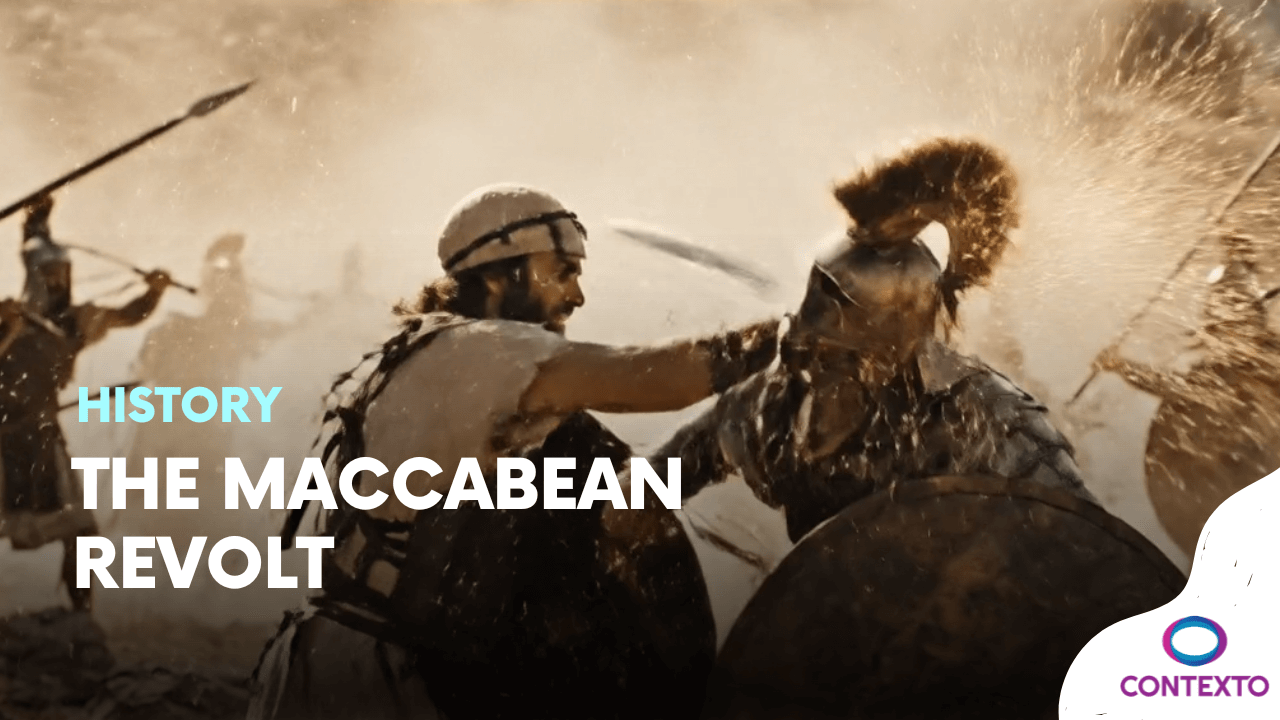
The Maccabean Revolt represents one of the most dramatic and consequential episodes in ancient Jewish history, an insurrection that not only ensured Judaism’s survival against existential threats but also established foundations for profound political and religious transformations. Between 167 and 160 BCE, a family of priests led an improbable revolt against the powerful Seleucid Empire, challenging not only Hellenistic military supremacy but also assimilationist currents within Jewish society itself. This heroic resistance, immortalized in the festival of Hanukkah, would result in the establishment of the Hasmonean Dynasty, which would govern Judea for nearly a century. The Maccabean Revolt against the oppressive policies of Antiochus Epiphanes irrevocably shaped Jewish identity, establishing precedents of religious resistance and political autonomy that would reverberate through the centuries. This article explores in depth the causes, characters, battles, and consequences of this extraordinary revolt that transformed Judaism and the ancient Middle East.
The historical context of the Maccabean Revolt
To properly understand the Maccabean Revolt, we must first examine the political and cultural context that made this rebellion not only possible but necessary in the eyes of its protagonists. Second-century BCE Judea found itself entangled in the complex geopolitical dynamics of the post-Alexandrian Hellenistic world, divided among the successor kingdoms of Alexander the Great’s generals.
The Hellenistic world and Judea
Following Alexander’s death in 323 BCE, his vast empire fragmented among his generals, the Diadochi. Judea, strategically situated between Ptolemaic Egypt and the Seleucid empire based in Syria, became an object of persistent dispute between these Hellenistic dynasties. For approximately a century (301-200 BCE), Judea remained under Ptolemaic control, a period characterized by relative religious autonomy and political stability for the Jewish population.
This situation transformed dramatically when Antiochus III the Great conquered Judea from the Ptolemies in 200 BCE, incorporating it into the Seleucid Empire. Initially, Antiochus III maintained tolerant policies, confirming traditional Jewish privileges and even partially financing worship at the Jerusalem Temple. This political honeymoon, however, would deteriorate drastically under his successor, preparing the ground for the Maccabean Revolt.
Hellenistic culture, disseminated by Alexander’s conquests, exerted powerful assimilationist pressures on Eastern peoples, including Jews. Greek gymnasia, theaters, athletic competitions, and Hellenistic political institutions represented not merely entertainment or cultural innovation but vehicles of civilizational transformation that threatened traditional identities. For the urban Jewish elite, particularly in Jerusalem, adopting Hellenistic customs offered pathways to social advancement and integration into the cosmopolitan Hellenistic world. For more conservative elements, it represented apostasy and betrayal of divine commandments.
The high priesthood crisis
Tensions between Hellenization and tradition manifested dramatically in struggles for control of the Jerusalem high priesthood. The high priest was not merely a religious leader but the effective political ruler of Judea under Seleucid suzerainty, controlling substantial Temple revenues and administering the region. Consequently, this position became the object of intense intrigues involving rival Jewish factions and Seleucid authorities.
In 175 BCE, Jason, brother of the legitimate high priest Onias III, by bribing the newly crowned Antiochus Epiphanes (Antiochus IV), acquired the high priesthood for himself. Significantly, Jason promised not only substantial financial payment but also to transform Jerusalem into a Greek polis, building a gymnasium and ephebion (registry of Greek citizens) and enrolling Jerusalemites as “Antiochenes” – citizens of Antioch.
The Second Book of Maccabees (4:13-15) dramatically describes the consequences: “There was such an extreme of Hellenization and increase in the adoption of foreign ways… that the priests were no longer interested in the services of the altar. Despising the Temple and neglecting the sacrifices, they hurried to take part in the unlawful proceedings in the wrestling arena after the signal for the discus-throwing.” This description, though possibly exaggerated by conservative authors, captures the explosive tensions between Hellenizers and traditionalists.
Three years later, Menelaus, outbidding Jason, purchased the high priesthood from Antiochus Epiphanes, though he was not even a member of the legitimate priestly family. This outrageous transaction, transforming the high priesthood into merchandise sellable to the highest Gentile bidder, deeply offended pious Jews. When Menelaus, unable to pay the promised amount, plundered Temple treasures, he provoked riots that culminated in the assassination of the respected former high priest Onias III – a martyrdom that would further inflame sectarian tensions.
Antiochus Epiphanes and religious persecution
The figure of Antiochus Epiphanes (reigned 175-164 BCE) dominates the Maccabean Revolt narrative as archetypal antagonist, personification of pagan tyranny and religious persecution. Understanding his motivations and policies is essential for grasping both the causes and character of the Maccabean rebellion.
The character of Antiochus Epiphanes
Antiochus Epiphanes (“God Manifest” – title assumed by the monarch himself) inherited a Seleucid empire weakened by military defeats against Rome and internal tensions. Following his father Antiochus III’s defeat by the Romans at Magnesia (190 BCE), the Seleucid empire was forced to pay punitive indemnities, draining resources and undermining prestige. Antiochus IV spent years as a hostage in Rome, an experience that shaped his understanding of political power and Seleucid vulnerability.
Ancient sources present Antiochus Epiphanes ambiguously. Polybius, a contemporary historian, describes him as a complex figure: occasionally accessible and generous, but also unpredictable and given to eccentric behaviors. His critics mocked his title, calling him “Epimanes” (the madman) instead of “Epiphanes” (god manifest). This hostile characterization predominated in Jewish historiography, where Antiochus emerges as a one-dimensional villain, though historical realities were probably more nuanced.
Antiochus’s ambitions included restoring Seleucid glory through military conquests, particularly against Ptolemaic Egypt, the traditional rival. These campaigns required massive financial resources, partially explaining his willingness to sell the Jewish high priesthood and subsequently plunder the Jerusalem Temple – actions that would provoke fatal confrontation with the Jewish people.
The Temple desecration
In 169 BCE, returning from a successful Egyptian campaign, Antiochus Epiphanes intervened in Jerusalem during riots between factions of Jason (deposed) and Menelaus (installed). Interpreting the disturbances as rebellion, Antiochus plundered the Temple, confiscating its treasures – an action justified by fiscal needs but perceived by Jews as abominable sacrilege.
Two years later, in 167 BCE, Antiochus implemented drastically more radical policies that would directly precipitate the Maccabean Revolt. After diplomatic humiliation in Alexandria, where Roman ambassadors ordered his withdrawal from Egypt under threat of war, Antiochus turned ferociously against Judea. First Maccabees (1:41-50) describes the infamous decrees:
“The king wrote to his whole kingdom that all should become one people, and that each should give up his customs… Many Israelites accepted his worship; they sacrificed to idols and profaned the sabbath… Women who had their children circumcised were put to death, with their babies hung from their necks… But many in Israel stood firm and resolved not to eat unclean food.”
Crucially, in December 167 BCE (Kislev 25 in the Jewish calendar), an altar to Olympian Zeus was erected upon the altar of burnt offering in the Jerusalem Temple, and swine – animals unclean according to Jewish law – were sacrificed there. This “abomination of desolation” (phrase from the Book of Daniel referring to this event) represented the supreme desecration, an outrage designed to destroy the Jewish religion at its most sacred essence.
The motivations for persecution
The motivations of Antiochus Epiphanes for unprecedented religious persecution remain debated by historians. Traditional explanations emphasize Hellenistic religious fanaticism or the monarch’s tyrannical personality. Modern scholars propose more nuanced interpretations.
Elias Bickerman influentially argued that the persecution originated primarily from Hellenizing Jews who convinced Antiochus that traditional Judaism was a source of political instability, persuading him that imposing cultural uniformity would pacify the region. According to this interpretation, the persecution was solicited by Hellenizing Jewish factions, not simply imposed by an ignorant foreign tyrant.
Victor Tcherikover proposed that Antiochus interpreted Jewish resistance as political rebellion, not merely religious conservatism. In a context of rivalry with Rome and Egypt, any internal dissidence seemed to threaten imperial security, justifying extreme repressive measures. The Jewish religion, being a distinctive identity marker that resisted assimilation, became a target for geopolitical as much as ideological reasons.
Regardless of precise motivations, Antiochus Epiphanes‘ policies created an existential crisis for Judaism, forcing an impossible choice: apostasy or martyrdom. This intolerable situation would detonate the Maccabean Revolt, a rebellion that would transform both Jewish history and the balance of power in the Hellenistic Middle East.
Mattathias and the revolt’s beginning
The spark that ignited the Maccabean Revolt was struck in Modein, a Jewish village in the hills northwest of Jerusalem, through the actions of Mattathias, an elderly priest from the Hasmon family – hence the name Hasmonean Dynasty applied later to the ruling descendants of this family.
Mattathias’s defiant act
First Maccabees (2:15-28) dramatically narrates the catalyzing incident. Seleucid officials arrived in Modein to enforce pagan worship, demanding that Mattathias, as a prominent local figure, offer sacrifice first, setting an example for others. They promised him riches and royal favor if he obeyed.
Mattathias refused vehemently: “Even if all the nations under the king’s dominion obey him… I and my sons and my brothers will walk in the covenant of our fathers… We will not obey the king’s words by turning aside from our religion to the right hand or to the left.” When another Jew stepped forward to offer sacrifice, Mattathias, inflamed with religious zeal, killed both the apostate and the Seleucid official, destroying the pagan altar.
This act of defiant violence – reminiscent of Phinehas’s zeal in the Book of Numbers – transformed passive resistance into open insurrection. Mattathias proclaimed: “Let everyone who has zeal for the Law and supports the covenant come out after me!” Then he fled to the mountains with his five sons: John, Simon, Judas, Eleazar, and Jonathan. This initial group of refugees would form the nucleus of military resistance that would unleash the Maccabean Revolt.
Formation of the resistance movement
In the Judean mountains, Mattathias and his followers organized guerrilla resistance. Pious Jews, including Hasidim (the pious ones) – possibly ancestors of later Pharisees and Essenes – joined the revolt. A tragic early episode would shape future tactics: when Seleucid forces attacked Jewish refugees on the Sabbath, the victims refused to fight on the holy day, resulting in massacre. Mattathias then decreed that defense was permitted on the Sabbath – a pragmatic halakhic (legal) decision that would prove crucial for military survival.
During this initial period, the rebels conducted guerrilla operations: attacking collaborationist villages, destroying pagan altars, forcibly circumcising Jewish children (reversing Seleucid prohibitions), and executing apostates. These brutal tactics reflected the revolt’s both religious and military nature – the Maccabean Revolt was simultaneously political insurrection and holy war.
Mattathias, already elderly when initiating the revolt, led for only one year before dying in 166 BCE. On his deathbed, he designated his son Simon as counselor (for his wisdom) and Judas as military commander (for his courage and tactical skill). This succession would prove extraordinarily fortunate, as Judas would transform incipient guerrilla into formidable military movement that would successfully challenge Seleucid power.
Judas Maccabeus: God’s hammer
Judas, Mattathias’s third son, would emerge as the legendary hero of the Maccabean Revolt, brilliant military commander whose improbable victories against superior forces would guarantee Jewish religious freedom and establish foundations for political independence. His epithet “Maccabeus” (possibly derived from “maqqaba” – hammer in Aramaic, or acronym of “Mi Kamocha Ba’elim Adonai” – Who is like You among the gods, O Lord) would become synonymous with heroic resistance.
Early military victories
Assuming leadership, Judas Maccabeus transformed guerrilla band into effective military force through innovative tactics exploiting superior knowledge of mountainous terrain, superior mobility, and high morale compensating for numerical and technological inferiority. His early victories would establish the pattern for the Maccabean Revolt.
In 166 BCE, Apollonius, governor of Samaria, led a punitive expedition against the rebels. Judas ambushed and defeated his forces, killing Apollonius himself and capturing his sword – a weapon Judas would carry for the rest of his life as trophy and symbol. Soon after, Seron, commander of the Syrian army, advanced with substantial force to crush the rebellion. Judas, though numerically inferior, inspired his men: “It is easy for many to be hemmed in by few… They come against us in great insolence and lawlessness… but we fight for our lives and our laws.”
At the ascent of Beth-horon, a narrow pass ideal for ambush, Judas decisively defeated Seron, killing approximately eight hundred enemy soldiers. This victory transformed perceptions among both Jews and Seleucids: the revolt was not a minor disturbance suppressible by local policing but a serious insurrection requiring coordinated military response. Simultaneously, it encouraged the hesitant to join the Maccabees, substantially expanding rebel forces.
The Battle of Emmaus
Antiochus Epiphanes, recognizing the seriousness of the threat, designated Lysias, his viceroy and tutor of the young crown prince, to crush the rebellion with substantial resources. Lysias sent a formidable army of 40,000 infantry and 7,000 cavalry (numbers possibly exaggerated in sources) under commanders Ptolemy, Nicanor, and Gorgias, accompanied by merchants anticipating purchasing captured Jews as slaves.
The Seleucid forces camped at Emmaus, in the western plains of Judea, in 165 BCE. Gorgias, an experienced commander, planned a nighttime surprise attack on the rebel camp in the mountains. Judas, anticipating this tactic, evacuated his camp, leaving it empty. When Gorgias attacked the deserted camp, Judas executed a brilliant counter-attack, striking the main Seleucid camp at Emmaus, now inadequately defended.
First Maccabees (4:14-15) describes the victory: “Nicanor and his men advanced to the sound of trumpets and battle songs. But Judas and his men met the battle invoking God with prayers. So, fighting with their hands and praying to God with their hearts, they laid low no less than thirty-five thousand men, greatly gladdened by God’s manifestation.” When Gorgias returned and saw the camp burning, he retreated precipitously.
The victory at Emmaus was transformational for the Maccabean Revolt. It demonstrated that Judas Maccabeus was not merely a lucky guerrilla leader but a brilliant military strategist capable of defeating regular Hellenistic armies in pitched battle. Judas’s prestige grew enormously, attracting even more recruits and encouraging hesitant Jews to abandon collaboration with the Seleucids.
The Battle of Beth-zur and Jerusalem’s reconquest
After Emmaus, Lysias personally led a campaign of 64,000 infantry and 5,000 cavalry (again, numbers possibly inflated) in 164 BCE. Approaching strategically from the south through Idumea to avoid mountainous terrain favorable to the Maccabees, Lysias encountered determined resistance at Beth-zur, a fortress guarding southern access to Jerusalem.
The Battle of Beth-zur resulted in another surprising Maccabean victory. Though sources diverge on details (First Maccabees describes decisive victory; Second Maccabees suggests inconclusive combat), the strategic result was unequivocal: Lysias withdrew, leaving the road to Jerusalem open. First Maccabees (4:35) declares that Lysias “saw that his army had been put to flight and that courage had been increased in Judas’s men… so he returned to Antioch.”
With the route to Jerusalem cleared, Judas Maccabeus and his forces entered the city in December 164 BCE, almost exactly three years after the initial desecration. The Temple was desolate, altars desecrated, gates burned, vegetation growing in the courts – a sight that moved the warriors to tears. Judas ordered immediate purification: ritually pure priests were designated to remove contaminated stones, build a new altar (with stones not worked by tools, according to Mosaic law), replace sacred vessels, and restore the sanctuary.
The feast of Hanukkah: celebrating victory
On Kislev 25, 164 BCE, exactly three years after the desecration, the Temple was rededicated with elaborate festivities lasting eight days. This inaugural celebration established the feast of Hanukkah (dedication), observed perpetually as commemoration of Maccabean victory and divine preservation of Judaism.
The historical origin of Hanukkah
First Maccabees (4:52-59) describes the rededication: “Early in the morning on the twenty-fifth day of the ninth month, which is the month of Chislev… they rose and offered sacrifice… on the new altar of burnt offering which they had made… They consecrated the Temple and restored the courts. They made new holy vessels… There was great joy among the people, and the disgrace brought by the Gentiles was removed. Judas, his brothers, and the whole assembly of Israel determined that every year at that season the dedication of the altar should be observed with joy and gladness for eight days.”
The eight-day duration probably reflected the feast of Sukkot (Tabernacles), which had not been properly observed that year due to war. Second Maccabees (10:6) explicitly confirms this connection: “They celebrated it for eight days with gladness in the manner of Sukkot.”
Later tradition would elaborate additional miraculous significance. The Talmud (Shabbat 21b), written centuries later, narrates the famous story of the oil: when the Maccabees reconquered the Temple, they found only one small jar of pure oil sufficient for one day, but it miraculously burned for eight days until new oil could be prepared. This narrative, absent from original Maccabean texts, became central to Hanukkah celebration, symbolizing spiritual victory and divine providence beyond military triumph.
Religious and political significance
Hanukkah represented both military victory and affirmation of Jewish religious identity against assimilationist pressures. The Temple’s reconquest was not merely property recovery but symbolic restoration of the covenant between God and Israel, repairing the desecration that had threatened to rupture this fundamental relationship.
Politically, the rededication established Judas Maccabeus as de facto leader of Judea, though technically the region remained under Seleucid sovereignty. Control of the Temple conferred religious and political authority, legitimizing Maccabean claims to leadership. This precedent would establish foundations for the eventual Hasmonean Dynasty that would govern independent Judea.
For Judaism, Hanukkah preserves memory of the Maccabean Revolt as a paradigm of religious resistance against oppression and forced assimilation. The festival affirms that distinctive Jewish identity deserves preservation, if necessary through armed struggle. This message would resonate through subsequent generations facing similar challenges to religious and cultural survival.
Continuation of the Maccabean Revolt
The Temple rededication constituted crucial spiritual and symbolic victory, but did not conclude the Maccabean Revolt. The conflict would continue for additional years, with Judas facing both external enemies and internal tensions, gradually transforming religious revolt into movement for political independence.
Judas’s later campaigns
After 164 BCE, Judas conducted expansive military campaigns, not only defending Jewish territory but also liberating Jewish communities in peripheral regions. Expeditions to Gilead (Transjordan), Galilee, and Idumea rescued persecuted Jews from hostile Gentile populations, resettling many in central Judea. These operations transformed the war’s character from defensive resistance to offensive expansionism.
In 163 BCE, Antiochus Epiphanes died in Persia during a failed eastern campaign, bequeathing the empire to his young son Antiochus V Eupator, with Lysias as regent. This transition created both opportunity and danger for the Maccabees. On one hand, Seleucid leadership weakened by succession instability offered space for consolidation of Jewish gains. On the other, new regimes often seek legitimacy through military victories.
The siege of Beth-zur and Seleucid concessions
In 162 BCE, Lysias led a massive expedition including war elephants – a terrifying weapon of the Hellenistic arsenal. First Maccabees (6:30) describes impressive forces: “one hundred thousand foot soldiers, twenty thousand horsemen, and thirty-two elephants trained for war.” Eleazar, Judas’s brother, heroically attacked an elephant he supposed carried the king, stabbing it from beneath, but the falling animal crushed him – a dramatic sacrifice illustrating courage but also the futility of individual heroic tactics against organized military power.
Judas was forced to retreat. Lysias besieged Beth-zur, which eventually capitulated for lack of provisions (it was a sabbatical year when fields lay fallow, limiting supplies). Jerusalem was subsequently besieged. The situation seemed desperate for the Maccabees.
However, political developments in Antioch saved Judas. Philip, Lysias’s rival designated regent by the dying Antiochus Epiphanes, returned from the east claiming authority. Lysias, urgently needing to return to confront this challenge, offered generous terms: revocation of religious persecutory decrees, permission for Jews to live according to their own laws, and general amnesty. Judas accepted, concluding the religious phase of the Maccabean Revolt. Freedom of worship was secured.
Crucially, however, Lysias demolished fortifications of the Temple Mount, limiting Jewish defensive capacity, and confirmed Alcimus, a Hellenizer, as high priest – an appointment that would provoke new conflicts, as many pious Jews rejected Alcimus as illegitimate.
Judas’s death and transition to his brothers
The final phase of Judas’s career was marked by renewed struggles against new Seleucid regimes and against the high priest Alcimus, whose Hellenism and brutal methods (including execution of sixty Hasidim seeking peace) reignited conflicts.
Judas Maccabeus’s last battles
In 161 BCE, Demetrius I Soter, nephew of Antiochus Epiphanes who had been a hostage in Rome, escaped and seized the Seleucid throne, executing young Antiochus V and Lysias. Demetrius, seeking to consolidate authority, sent Bacchides with a powerful army to install Alcimus as high priest. Judas resisted, but many Jews, weary of war, initially accepted Alcimus, hoping for peace.
When Alcimus’s atrocities became evident, Judas resumed military operations. Demetrius sent Nicanor (survivor of earlier campaigns) with orders to crush Judas definitively. After fruitless initial negotiations, Nicanor threatened to destroy the Temple if Judas was not surrendered – a blasphemy that horrified even collaborationist priests.
In March 161 BCE, at the Battle of Adasa, Judas achieved one of his most decisive victories, defeating and killing Nicanor. “Nicanor’s Day” (Adar 13) was established as a commemorative festival. This victory, however, would be Judas’s last triumph. The Maccabean Revolt was about to lose its most charismatic leader.
Demetrius, furious, sent Bacchides again with even greater forces. In April 160 BCE, near Elasa, Judas faced a vastly superior Seleucid army. First Maccabees (9:5-6) describes the desperate situation: “When Judas saw that Bacchides’s army was strong, many of his followers deserted, until only eight hundred men remained.” His commanders implored him to retreat and live to fight another day.
Judas Maccabeus, however, refused: “Far be it from me to do such a thing, to flee from them. If our hour has come, let us die bravely for our brothers and leave no cause to question our honor.” In the subsequent battle, Judas fought heroically but was killed. First Maccabees (9:18) declares laconically: “Thus Judas fell, and the rest fled.”
Judas’s death marked a critical moment in the Maccabean Revolt. His body was rescued by his brothers Jonathan and Simon, who buried him in the family tomb in Modein. First Maccabees (9:21) offers a moving epitaph: “All Israel made great lamentation for him; they mourned for many days and said: ‘How is the hero fallen, the savior of Israel!'”
Jonathan and Simon: consolidating the Hasmonean Dynasty
After Judas’s death, the Maccabean Revolt could have ended in total defeat. Seleucid forces controlled Jerusalem, Hellenizers dominated politically, and the rebels were demoralized and dispersed. The Maccabean movement’s survival and eventual triumph were due to the astute leadership of Judas’s surviving brothers, particularly Jonathan and Simon.
Jonathan: from guerrilla to high priest
Jonathan, the youngest brother, assumed leadership of the Maccabean remnants in 160 BCE. Initially, the situation seemed hopeless. Bacchides established fortifications throughout Judea, installing garrisons to control the population. The Maccabees were reduced to a guerrilla band operating from the desert beyond the Jordan – a situation reminiscent of the early days under Mattathias.
Jonathan’s character differed from Judas’s. While Judas was primarily a charismatic warrior, Jonathan demonstrated sophisticated diplomatic skills, expertly exploiting rivalries within the fragmenting Seleucid empire. This combination of political astuteness and military capability would enable Jonathan to transform marginal insurgency into recognized principality.
For several years (160-157 BCE), Jonathan conducted low-intensity guerrilla warfare. Gradually, as the internal Seleucid situation deteriorated with succession disputes, Maccabean power resurged. In 157 BCE, Bacchides, recognizing the futility of completely crushing the rebels, negotiated truce with Jonathan, withdrawing Seleucid forces and allowing Jonathan to establish a base in Michmash, from where he governed as de facto leader of the Jewish community.
The transformational opportunity came in 152 BCE, when Alexander Balas, a pretender to the Seleucid throne claiming to be Antiochus Epiphanes‘ son, challenged Demetrius I. Both courted Jonathan, offering concessions to secure his support. Demetrius offered expanded autonomy and tax reductions. Alexander Balas, going further, appointed Jonathan high priest – an offer Jonathan accepted.
In October 152 BCE (feast of Sukkot), Jonathan publicly donned the high priest’s vestments for the first time. This appointment was irregular for multiple reasons: Jonathan was not a member of the traditional Zadokite high-priestly lineage; the office was granted by a Gentile monarch not through legitimate Jewish processes; and it represented clear politicization of sacred office. Nonetheless, it consolidated Maccabean power, uniting religious and political authority.
The appointment provoked opposition from pietist groups, possibly contributing to the Essene schism that would reject the Temple under Hasmonean administration as corrupted. For most Jews, however, Jonathan preferably represented native Jewish leadership over direct foreign domination.
Territorial expansion and diplomacy
During the following decade (152-143 BCE), Jonathan skillfully navigated through successive Seleucid civil wars, alternating alliances as convenient, each transition resulting in territorial concessions and expanded autonomy. He conquered coastal cities, expanded Judean borders, and established treaties with Rome and Sparta, affirming international status of independent Jewish polity.
In 143 BCE, Tryphon, Seleucid regent, perceiving Jonathan’s growing power as a threat, treacherously invited him to Ptolemais (Acco), capturing him. Tryphon eventually executed Jonathan, but this betrayal, far from destroying the Maccabean cause, consolidated it under the last surviving brother, Simon.
Simon and Jewish independence
Simon, Mattathias’s second son and oldest of the surviving brothers, assumed leadership in 142 BCE. Demonstrating wisdom accumulated from decades of struggle, Simon quickly consolidated his position, negotiating with Demetrius II (who was fighting Tryphon) complete tax exemption – effective recognition of Jewish independence.
First Maccabees (13:41-42) marks this historic moment: “In the year one hundred and seventy [of the Seleucid era, 142 BCE], the yoke of the Gentiles was removed from Israel, and the people began to write in their documents and contracts: ‘In the first year of Simon, the great high priest, commander and leader of the Jews.'” After twenty-five years, the Maccabean Revolt had achieved its supreme objective: Jewish political independence.
Simon completed conquest of remaining Seleucid fortresses in Jewish territory, including Gazara and crucially the citadel (Acra) in Jerusalem, a Seleucid garrison that had dominated the Temple Mount since 167 BCE. The fall of the Acra in 141 BCE was celebrated with elaborate festivities, eliminating the last symbol of foreign domination.
In a popular assembly in 140 BCE, the Jewish people formally recognized Simon as “leader and high priest forever, until a trustworthy prophet should appear” – a significant formula indicating that, while recognizing the situation’s irregularity, Jews pragmatically accepted Hasmonean leadership as necessary until messianic restoration. This decree formally established the Hasmonean Dynasty that would govern Judea until Roman conquest in 63 BCE.
Simon governed until 134 BCE, when he was assassinated by his son-in-law Ptolemy, governor of Jericho, in a frustrated conspiracy. His son, John Hyrcanus I, quickly consolidated power, inaugurating a period of massive territorial expansion that would transform Judea into a significant regional state.
Historical sources for the Maccabean Revolt
Our understanding of the Maccabean Revolt derives from multiple ancient sources, each offering valuable perspectives but also limitations that historians must carefully navigate. Historical reconstruction requires critical evaluation of these sources, considering their contexts, purposes, and biases.
The Books of the Maccabees
The most important primary sources are First and Second Books of Maccabees, distinct works written independently, offering complementary but occasionally contradictory perspectives.
First Maccabees, originally composed in Hebrew (though surviving only in Greek translation) approximately between 130-100 BCE, offers a relatively sober chronological narrative covering the period from 175 to 134 BCE – from Antiochus Epiphanes until Simon’s death. The author, probably close to the Hasmonean court, presents a perspective favorable to the dynasty, portraying Maccabean leaders as divinely assisted but essentially human heroes, emphasizing their military and political achievements.
Stylistically and theologically, First Maccabees models itself after biblical historical books (particularly Samuel and Kings), employing archaizing language and narrative structures reminiscent of deuteronomistic tradition. Significantly, it avoids explicit miraculous divine intervention, presenting Maccabean victories as results of courage, strategy, and piety – not spectacular supernatural miracles. God remains implicitly present but not dramatically interventionist.
Second Maccabees, written in Greek probably slightly later, represents not independent history but epitome (summary) of a larger five-volume work by Jason of Cyrene (now lost). It covers a shorter period (176-161 BCE), concluding with Nicanor’s death. It contrasts dramatically with First Maccabees in style and theology.
Second Maccabees is highly theological, emphasizing miraculous divine intervention, resurrection of the dead, and martyrdom. It presents dramatic narratives of Jewish martyrs (particularly Eleazar and the seven brothers with their mother) who prefer horrific torture to apostasy. These stories, absent from First Maccabees, became influential in later Jewish and Christian martyrological literature.
The author of Second Maccabees demonstrates special interest in the Temple and its rituals, dedicating extensive attention to desecration and purification. Military numbers are frequently more exaggerated than in First Maccabees, and supernatural elements (angelic apparitions, heavenly horsemen) appear prominently. These characteristics suggest primarily edificatory and theological purpose rather than historiographic in the modern sense.
Modern historians generally consider First Maccabees more factually reliable, though Second Maccabees preserves valuable traditions absent in the first and offers perspectives on religious and cultural dimensions of the Maccabean Revolt. Used critically and complementarily, both texts provide a solid foundation for historical reconstruction.
Josephus Flavius
Josephus Flavius, first-century CE Jewish historian, narrates the Maccabean Revolt in his “Jewish Antiquities” (Books XII-XIII), written approximately in 93-94 CE. Josephus relies primarily on First Maccabees, occasionally simplifying or adapting for Greco-Roman audiences. Though generally less detailed than his sources, Josephus occasionally preserves additional traditions and offers useful interpretations.
Significantly, Josephus writes under Roman imperial patronage, shaping his narrative to justify both the Maccabean revolt (resistance against intolerable tyranny) and eventual Roman dominion (inevitable given Rome’s superior power). His characterization of Hasmonean leaders becomes progressively critical in later generations, possibly reflecting Pharisaic antipathy (the tradition to which Josephus affiliated) against later Hasmonean monarchs.
Other ancient sources
Polybius, Greek historian contemporary to the events, offers valuable context about the Seleucid empire and characterization of Antiochus Epiphanes in his “Histories,” though he rarely mentions Jewish affairs specifically. The Book of Daniel, particularly chapters 7-12, written during Antiochus’s persecution, offers contemporary apocalyptic perspective, encoding events in symbolic visions.
Later rabbinic literature (Mishnah, Talmud, Midrashim) contains sparse references to the Maccabees, frequently ambivalent. Rabbis, heirs of Pharisaic tradition, demonstrated ambivalence toward the Hasmoneans due to usurpation of the high priesthood and later dynastic developments. The Talmud preserves traditions about Hanukkah but emphasizes the miracle of the oil over military feats, reflecting rabbinic discomfort with celebrating violence.
Consequences and legacy of the Maccabean Revolt
The Maccabean Revolt profoundly transformed Judaism and Middle Eastern history, establishing religious, political, and cultural precedents that would reverberate through the centuries. Its immediate consequences and enduring legacy merit careful consideration.
Establishment of the Hasmonean Dynasty
The success of the Hasmonean Dynasty established by the Maccabean Revolt was extraordinary. From guerrilla insurgents, the Hasmoneans transformed into a ruling dynasty of a significant state. Under John Hyrcanus I, Alexander Jannaeus, and others, Judea expanded territorially, conquering Idumea, Samaria, Galilee, and Transjordanian territories, rivaling in extent the ancient Davidic kingdom.
This expansion included forced conversion of conquered populations (particularly Idumeans), a controversial practice that altered Judean demographics. Ironically, the dynasty that emerged from resistance against forced Hellenization would employ similar tactics of religious imposition – a transformation not lost on contemporary critics.
Hasmonean monarchs combined the high priesthood with kingship, eventually assuming explicit royal title (John Hyrcanus I and especially Alexander Jannaeus). This fusion of authorities, while consolidating power, violated traditional separation between priestly and royal functions, provoking opposition from pietist groups, particularly Pharisees and Essenes.
The dynasty ended ignominiously with civil war between Hyrcanus II and Aristobulus II, offering Rome a pretext for intervention. Pompey conquered Jerusalem in 63 BCE, ending Jewish independence. The last significant Hasmonean ruler, Antigonus II, was executed by Mark Antony in 37 BCE, allowing Herod the Great’s ascension, an Idumean who had married into the Hasmonean family but represented a new order under Roman hegemony.
Religious and cultural transformations
The Maccabean Revolt crystallized tensions between Hellenization and Jewish tradition, establishing parameters for subsequent debates about acculturation and identity. The Maccabean victory did not eliminate Hellenistic influence – the Hasmonean Dynasty itself adopted many aspects of Hellenistic culture, including Greek-style coin minting, employment of Greek mercenaries, and adoption of Hellenistic administrative practices.
What the revolt established was the principle that certain lines – particularly Torah observance, circumcision, dietary laws, and Temple sanctity – could not be crossed without loss of fundamental Jewish identity. This balance between selective cultural engagement and preservation of religious distinctives would characterize subsequent Judaism.
The experience of persecution and martyrdom produced martyrological literature that would profoundly influence both Judaism and nascent Christianity. The stories of Maccabean martyrs in Second Maccabees provided paradigms of heroic resistance, affirmation of resurrection, and sanctification of the divine name (Kiddush HaShem) that would resonate through subsequent generations facing persecution.
Impact on early Christianity
The Maccabean Revolt and subsequent Hasmonean period established the context in which Christianity emerged. The divisions among Pharisees, Sadducees, Essenes, and other sects, crystallized partially in reaction to Hasmonean developments, configured the first-century Jewish religious landscape.
Messianic expectations, intensified during the Maccabean period (when national liberation seemed possible through charismatic leadership), remained elevated in the Roman period, providing context for Jesus’s ministry and contemporary messianic movements. The Maccabean model of military resistance against pagan oppression influenced later Jewish revolutionary movements, including Zealots during the Great Revolt against Rome (66-73 CE).
The early Christian church, though rejecting violent resistance, appropriated Maccabean themes of martyrdom and resistance to apostasy. Second Maccabees, with its martyrological narratives and resurrection affirmations, was especially influential. The feast of Hanukkah is mentioned in the Gospel of John (10:22-23) as the “Feast of Dedication,” indicating its recognition in first-century Judaism.
Hanukkah in Jewish tradition
The feast of Hanukkah, originated in the Temple rededication in 164 BCE, evolved significantly through the centuries, transforming from commemoration of military victory into celebration primarily of miracle and spiritual identity.
Liturgical and ritual development
The central practice of Hanukkah – progressively lighting candles during eight nights, adding a new one each night – developed gradually. The Talmud (Shabbat 21b) prescribes lighting an eight-branched menorah (hanukkiah), placing it visibly at the house entrance or window to “proclaim the miracle.” Specific blessings were formulated, and biblical passages (particularly Numbers 7 about Tabernacle dedication) are read during the festival.
Liturgically, Psalm 30 (“A Song at the Dedication of the House”) and the Al HaNissim (“For the Miracles”) prayer were incorporated into daily Hanukkah services. Al HaNissim succinctly summarizes the Maccabean narrative, emphasizing divine deliverance: “In the days of Mattathias… when the wicked Greco-Syrian kingdom rose against Your people Israel… You in Your great compassion… delivered the strong into the hands of the weak… Your children came to the Holy of Holies of Your House… kindled lights in the courts of Your Sanctuary.”
Additional customs include playing dreidel (a spinning top with Hebrew letters representing “A Great Miracle Happened There”), consuming foods fried in oil (latkes – potato pancakes, and sufganiyot – jelly donuts), and distributing gelt (money or chocolate coins) to children. These customs, developed in medieval and modern periods, add festive and pedagogical dimensions to the observance.
Hanukkah in modernity
In modern Judaism, Hanukkah acquired renewed significance, particularly in diasporic contexts where it temporally coincides with Christian Christmas. This calendrical proximity created both opportunities and challenges for Jewish families seeking to affirm distinctive identity while participating in the seasonal festive spirit.
Zionism revalorized military aspects of the Maccabean Revolt, previously minimized by rabbinic tradition. For Zionist ideologues, the Maccabees represented a paradigm of Jewish self-determination and heroic resistance, models for Jewish national renewal. Zionist youth groups adopted Maccabean names, and military narrative was emphasized in Israeli education, balancing traditional rabbinic emphasis on spiritual miracle.
Contemporary debates about Hanukkah reflect broader tensions in Jewish identity: should the festival emphasize Jewish particularism or universal values? Militarism or pacifism? Supernatural miracle or human agency? These questions ensure that Hanukkah, originated over two millennia ago, remains relevant and contested.
Final considerations
The Maccabean Revolt stands as one of the most extraordinary and consequential episodes in Jewish history, an improbable uprising that not only ensured Judaism’s physical and spiritual survival at a critical moment but also established precedents that shaped subsequent development of Jewish religion and culture. From marginalized guerrillas sheltering in Judean mountains, the Maccabees transformed into a ruling dynasty of an independent state, achieving victory few would have considered possible when Mattathias first rose against Antiochus Epiphanes‘ officials in Modein.
The revolt’s central characters – Mattathias, Judas, Jonathan, and Simon – demonstrated a remarkable combination of military courage, political astuteness, and religious commitment. Judas Maccabeus particularly emerges as a paradigmatic heroic figure, brilliant military commander whose series of improbable victories against superior forces would inspire subsequent generations. His willingness to sacrifice life for the cause, demonstrated dramatically at Elasa, consolidated his legendary status.
The causes of the Maccabean Revolt were complex, interweaving religious, political, and cultural factors. The aggressive Hellenization of Antiochus Epiphanes, culminating in Temple desecration and prohibition of fundamental Jewish practices, created an existential crisis demanding response. Simultaneously, internal tensions within Jewish society between Hellenizers and traditionalists contributed to conflict escalation, reminding us that wars of “religion” are rarely simplistically about religion alone.
The Hasmonean Dynasty established by Maccabean victory would govern Judea for nearly a century, a period of significant territorial expansion and institutional development. However, Hasmonean trajectory also illustrates dangers of success: the dynasty that emerged from resistance against high-priestly corruption eventually corrupted itself through dynastic struggles, transforming sacred functions into instruments of secular power. This irony did not escape contemporary critics and later historians.
Historical sources about the Maccabean Revolt – primarily the Books of Maccabees and Josephus Flavius – offer rich perspectives but also reflect specific agendas of their authors. First Maccabees presents relatively sober pro-Hasmonean narrative; Second Maccabees emphasizes theological and martyrological dimensions; Josephus adapts traditions for Greco-Roman audiences. Used critically, these sources permit robust though always provisional historical reconstruction.
The feast of Hanukkah, originated in the Temple rededication in 164 BCE, preserves memory of the Maccabean Revolt for Jewish communities globally. Its evolution from primarily military victory celebration to emphasis on spiritual miracle reflects Judaism’s own development, from Temple-centered religion to rabbinic tradition emphasizing study and ritual observance independent of central sanctuary. The miracle of the oil, absent from original Maccabean sources but central in modern observance, symbolizes interpretive transformation characterizing living tradition.
For students of history and theology, the Maccabean Revolt offers enduring lessons about religious resistance, negotiations of cultural identity, revolutionary movement dynamics, and complexities of political success. The revolt demonstrates that small, apparently powerless communities can through commitment, effective leadership, and favorable circumstances (including adversaries’ divisions) achieve surprising victories against superior forces.
Simultaneously, subsequent Hasmonean history warns about corrupting tendencies of uncontrolled power and dangers of fusion between religious and political authority. The dynasty that emerged from ideological purity eventually succumbed to political pragmatism that sacrificed original principles, a pattern unhappily repeated throughout history by revolutionary movements achieving power.
Finally, the Maccabean Revolt affirms the core value that animated the rebels: certain convictions merit extreme defense, even under threat of annihilation. For Mattathias and his sons, Jewish identity grounded in covenant with God, expressed through Torah observance and Temple worship, represented a non-negotiable value justifying resistance unto death. This willingness for supreme sacrifice for religious convictions, eloquently documented in martyrological narratives, would inspire countless subsequent generations facing persecution, establishing a resistance paradigm transcending its specific historical context.
FAQ about the Maccabean Revolt
Why did the Maccabean Revolt begin?
The Maccabean Revolt began in response to oppressive policies of Antiochus Epiphanes, Seleucid emperor who prohibited fundamental Jewish practices (circumcision, Sabbath observance, dietary laws) and desecrated the Jerusalem Temple by erecting an altar to Zeus and sacrificing swine. The priest Mattathias initiated the revolt in 167 BCE in Modein when he refused to perform pagan sacrifice and killed both a Jew who was willing to do so and the Seleucid official present.
Who were the main leaders of the Maccabean Revolt?
The main leaders were Mattathias (initiator of the revolt) and his five sons: Judas Maccabeus (the most brilliant military commander who defeated multiple Seleucid armies and rededicated the Temple), Jonathan (who became high priest and skilled diplomat), Simon (who achieved complete Jewish independence), John, and Eleazar. Judas Maccabeus is the most famous, whose nickname “Maccabeus” (hammer) gave name to the entire revolt.
What was the Temple desecration by Antiochus Epiphanes?
In December 167 BCE, Antiochus Epiphanes transformed the Jerusalem Temple into a sanctuary to Olympian Zeus, erecting a pagan altar upon the altar of burnt offering and sacrificing swine (animals considered unclean in Jewish law). This “abomination of desolation” represented the greatest possible desecration of Judaism’s most sacred place, forcing many Jews to choose between apostasy or martyrdom, directly precipitating the Maccabean revolt.
What is the relationship between the Maccabean Revolt and Hanukkah?
The feast of Hanukkah (Dedication) commemorates the rededication of the Jerusalem Temple by Judas Maccabeus in December 164 BCE, exactly three years after desecration by Antiochus Epiphanes. The eight-day festival celebrates the Maccabean Revolt victory and restoration of legitimate Jewish worship. Later tradition added the story of the oil miracle that burned for eight days, transforming Hanukkah into celebration of both military victory and divine providence.
Were the Maccabees Pharisees, Sadducees, or Essenes?
The Maccabees did not belong to any of these specific sects, which crystallized as distinct groups partially in reaction to developments during and after the Maccabean Revolt. Initially, the Maccabees were supported by the Hasidim (pious ones), a group that later may have given rise to Pharisees and Essenes. As the Hasmonean Dynasty consolidated power, relationships with these factions became complex and frequently antagonistic.
Was the Maccabean Revolt successful?
The Maccabean Revolt was extraordinarily successful in its initial objectives: it restored Jewish religious freedom, rededicated the Temple, and eventually (under Simon) achieved complete political independence in 142 BCE. The Hasmonean Dynasty established by the Maccabees governed independent Judea for nearly a century. In the long term, however, dynastic corruption and Hasmonean civil wars led to Roman intervention and loss of independence in 63 BCE.
Why aren’t the Books of Maccabees in the Hebrew Bible?
The Books of Maccabees were excluded from the Jewish canon established by rabbis for multiple reasons: they were composed late (after perceived closure of prophecy), promoted the Hasmonean Dynasty with which Pharisaic rabbis maintained ambivalent relations, and emphasized military victory over divine miracle. They remain, however, in the deuterocanonical canon of Catholic and Orthodox churches. Protestants generally classify them as apocrypha – useful but not canonical.
Bibliographical references
- Bar-Kochva, Bezalel. Judas Maccabaeus: The Jewish Struggle Against the Seleucids. Cambridge University Press, 1989.
- Bartlett, John R. The First and Second Books of the Maccabees. Cambridge University Press, 1973.
- Bickerman, Elias. The God of the Maccabees: Studies on the Meaning and Origin of the Maccabean Revolt. Brill, 1979.
- Cohen, Shaye J.D. From the Maccabees to the Mishnah. Westminster John Knox Press, 2006.
- Doran, Robert. The First Book of Maccabees. In: The New Interpreter’s Bible, Vol. IV. Abingdon Press, 1996.
- Goldstein, Jonathan A. I Maccabees: A New Translation with Introduction and Commentary. Anchor Bible. Doubleday, 1976.
- Goldstein, Jonathan A. II Maccabees: A New Translation with Introduction and Commentary. Anchor Bible. Doubleday, 1983.
- Grabbe, Lester L. A History of the Jews and Judaism in the Second Temple Period, Volume 2: The Coming of the Greeks. T&T Clark, 2008.
- Hengel, Martin. Judaism and Hellenism: Studies in their Encounter in Palestine during the Early Hellenistic Period. Fortress Press, 1974.
- Josephus Flavius. Jewish Antiquities. Trans. Paul L. Maier. Kregel Academic, 1999.
- Rappaport, Uriel. The First Book of Maccabees: Introduction, Hebrew Translation, and Commentary. Yad Ben-Zvi Press, 2004 (in Hebrew).
- Schwartz, Daniel R. The Second Book of Maccabees: Introduction, Hebrew Translation, and Commentary. Yad Ben-Zvi Press, 2004 (in Hebrew).
- Sievers, Joseph. The Hasmoneans and Their Supporters: From Mattathias to the Death of John Hyrcanus I. Scholars Press, 1990.
- Tcherikover, Victor. Hellenistic Civilization and the Jews. Jewish Publication Society, 1959.
- VanderKam, James C. From Joshua to Caiaphas: High Priests after the Exile. Fortress Press, 2004.
- Williams, David S. The Structure of 1 Maccabees. Catholic Biblical Association, 1999.
What surprised you most about the Maccabean Revolt? Do you see parallels between Maccabean resistance and modern liberation movements? How has the Maccabees’ story shaped your understanding of the Hanukkah festival? What lessons from the Hasmonean Dynasty do you consider relevant for religious and political leadership today? Share your reflections and questions in the comments!



Leave A Comment