
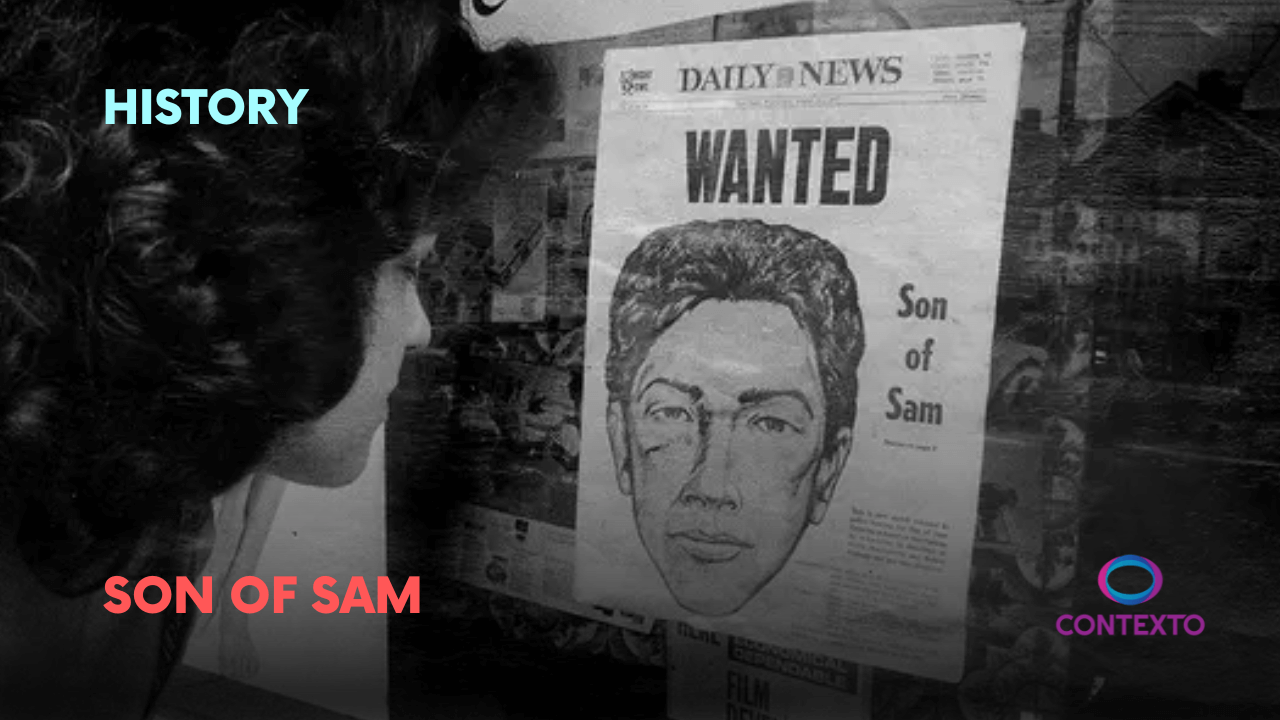
The story of Son of Sam is not merely a chapter in the annals of true crime; it is a chilling portrait of fear, media frenzy, and societal vulnerability.
In the summer of 1977, New York City found itself suspended between heat and horror, as a serial killer known as the Son of Sam haunted its boroughs.
Behind this ominous moniker stood David Berkowitz, a name that would sear itself into the collective consciousness of America.
In this article, we are explore the historical facts about the Son of Sam case, the meaning it carried for a city in turmoil, and the broader implications it left for criminology, media ethics, and public life.
The emergence of the Son of Sam
When the first shots rang out in July 1976, the pattern was not yet clear. Crime, after all, was no stranger to the city, which was already wrestling with economic decline, rising unemployment, and a pervasive sense of instability.
Yet the early shootings bore a peculiar signature: young couples, often seated in parked cars, ambushed without warning.
New York crimes in that era were abundant, but this unfolding phenomenon possessed a chilling consistency that would soon crystallize into the legend of the Son of Sam.
David Berkowitz and his transformation into a serial killer
The man at the center of the chaos, David Berkowitz, was born in 1953 and adopted by a middle-class Jewish family in the Bronx.
His early life, though marked by emotional turbulence, gave few signs of the monstrous identity he would later assume.
And yet, as psychologists and criminologists have since observed, unresolved trauma, profound alienation, and the corrosive silence of untreated mental suffering often form the invisible architecture of future violence.
By the time he began his string of murders, Berkowitz had crafted a narrative in which he believed—or chose to believe—that demonic forces commanded him.
His infamous letters to the police and press, laced with eerie bravado and somewhat theatrical menace, would solidify the name “Son of Sam,” allegedly referencing a neighbor’s dog he claimed was possessed.
Whether delusion or manipulation, this mythology intensified his grip on the city’s imagination.
The summer of fear: New York, 1977
To understand the historical relevance of the Son of Sam case, one must inhabit, if only imaginatively, the psychological landscape of New York in 1977.
It was a summer heavy with heat and desperation—an environment ripe for panic.
As shootings continued, fear seeped into the cracks of daily life: lovers hesitated before parking under streetlights; women dyed or cut their hair to avoid the killer’s apparent preference for long dark styles; the streets felt haunted by an unseen predator.
In this heightened state of tension, the killer’s correspondence with the media became an accelerant.
His letters, sensationalized across newspapers, fed a morbid curiosity while also stoking terror.
Here, the case intersects with an essential theme of modernity: the symbiotic yet dangerous relationship between crime and the media.
For the first time, a serial killer understood—perhaps instinctively—how to use public communication as a weapon.
The police hunt and the limitations of 1970s investigation
The NYPD, overwhelmed by the scale and pressure of the investigation, undertook what would become one of the largest manhunts in the city’s history.
Lacking modern forensic technologies such as DNA analysis or digital databases, investigators pieced together clues with a patience that today seems almost archaic.
Thousands of interviews, endless nights of surveillance, and mountains of paperwork framed the pursuit, creating a portrait of law enforcement stretched to its limits.
Ultimately, a simple parking ticket issued near the scene of the final shooting led to Berkowitz’s arrest in August 1977.
When officers approached him outside his Yonkers apartment, he allegedly greeted them with a phrase now etched into true-crime lore: “Well, you got me.”
The meaning and cultural impact of the Son of Sam case
The reverberations of the Son of Sam case extended far beyond the arrest of David Berkowitz.
It reshaped how the public perceives the dynamics between fear, authority, and the unknown.
It also played a significant role in the evolution of legislation, psychology, and media studies.
The birth of the “Son of Sam laws”
One of the most consequential outcomes was the creation of the so-called “Son of Sam laws.”
These laws prevented criminals from profiting from the notoriety of their crimes—for example, through book deals or film rights.
The intent was both moral and symbolic: to ensure that society would not allow infamy to become currency.
Though challenged in courts over the years, variations of these statutes continue to influence legal debates surrounding crime, media, and free speech.
A turning point in serial killer studies
The Son of Sam murders also catalyzed major advances in the study of serial offenders.
As criminologists sifted through Berkowitz’s writings, interviews, and psychological evaluations, the case became a crucial touchstone for understanding patterns of serial behavior.
It contributed to early profiling techniques used by the FBI’s Behavioral Science Unit, paving the way for a new lexicon of criminal psychology.
In many ways, Berkowitz represented a modern archetype: the isolated individual whose internal disintegration spills catastrophically into the world.
His case pushed researchers to consider how personal mythology, delusion, and symbolic communication intertwine within the psyche of a serial killer.
The media’s role in amplifying fear
Perhaps no other element speaks so starkly to the meaning of the Son of Sam phenomenon as the media’s involvement.
Headlines became catapults for panic; newspapers published his letters in full, granting him a stage upon which to perform his dark theatrics.
The era’s tabloid culture, hungry for sensational stories, transformed crime into spectacle.
This relationship raised difficult ethical questions:
- To what extent should the press publish communications from a killer?
- Did the attention encourage further violence?
- How does media framing influence collective fear?
These inquiries echo today in countless debates about responsible journalism and the coverage of violent offenders.
The psychological dimension: understanding David Berkowitz
If history remembers the Son of Sam as a figure of terror, psychology regards David Berkowitz as a puzzle of pathology and myth-making.
Court evaluations described him as suffering from paranoid and delusional thinking, though legally competent.
His shifting narratives—voices from demons, spiritual transformation in prison, claims of being part of a larger cult—complicate any definitive portrait.
In interviews following his incarceration, Berkowitz alternated between remorse, confession, and theological reflection.
Whether sincere or performative, these statements reveal a fractured consciousness struggling to reinterpret its own legacy.
They also highlight a fundamental truth about serial killers: their actions often express an internal chaos more profound than any external motive.
The archetype of the mid-century serial killer
The Son of Sam case also aligns with patterns later identified among serial killers emerging from the mid-20th century—individuals often molded by social fragmentation, psychological trauma, and an unmoored sense of identity.
Their crimes tended to be both violent and symbolic, communicating messages rooted in fantasy, resentment, or imagined persecution.
The historical relevance of the case lies partly in its timing: it occurred at a moment when American culture was becoming increasingly aware of serial homicide as a unique phenomenon.
Shortly after Berkowitz’s arrest, names like Ted Bundy and John Wayne Gacy would further shape this grim category of crime.
The legacy of the 1977 attacks
To evaluate the meaning of the Son of Sam crimes is to examine how societies confront fear, disorder, and the fragility of everyday life.
In the wake of the murders, New York was forced to reflect on its vulnerabilities—economic, psychological, and structural.
The case illuminated the ease with which panic can infiltrate a community and the power of narrative to shape public behavior.
Transformation of policing and public awareness
The NYPD, humbled and galvanized by the ordeal, gradually embraced new investigative methods.
Data-driven approaches, behavioral profiling, and improved interdepartmental communication evolved in part from the lessons of the investigation.
In this sense, the crimes of 1977 acted as a catalyst for modernization within law enforcement.
The public, too, became more attuned to personal safety and the reality of predatory violence.
Communities began adopting neighborhood watch programs, and discussions about the psychological origins of violent crime entered mainstream dialogue.
Why Son of Sam still haunts the cultural imagination
More than four decades later, the shadow of the Son of Sam continues to stretch across documentaries, academic studies, podcasts, and films.
This enduring fascination reflects not merely morbid curiosity but a deeper yearning to understand the forces that dissolve the boundary between ordinary life and extraordinary horror.
The case offers a prism through which we explore human vulnerability, the fragility of meaning, and the consequences of societal neglect.
It asks, in its own dreadful way, what happens when alienation turns inward until it erupts outward in violence.
And it demonstrates how a single individual, armed with a gun and a narrative, can command the fears of millions.
Conclusion: the meaning of this fate
The fate of the Son of Sam case is not merely a criminal matter; it is a cultural parable.
It reveals how a city, already strained by economic hardship and instability, can become a stage upon which fear performs its most devastating play.
It underscores the responsibilities of the media, the vulnerabilities of institutions, and the profound necessity of understanding mental illness and social isolation.
Ultimately, the legacy of David Berkowitz is not found in his self-mythology or even in his crimes, but in the societal mirror he inadvertently held up to New York—and to all of us.
Through him, we confront uncomfortable truths: how meaning can fracture, how fear can spread, and how desperately the human psyche seeks coherence, even in madness.
Frequently asked questions (FAQ)
Who was the Son of Sam?
The Son of Sam was the moniker used by serial killer David Berkowitz, who terrorized New York City between 1976 and 1977.
Why was he called the Son of Sam?
The name appeared in letters Berkowitz sent to the police and media. He claimed it referred to a demonic entity commanding him, though this was likely delusional or symbolic.
How many victims were there?
Berkowitz killed six people and wounded seven others before his arrest in August 1977.
What was the impact of the Son of Sam case on society?
The case influenced criminal profiling, media ethics, legislative reforms, and public awareness about serial killers.
Does David Berkowitz still claim involvement in a cult?
In some interviews, he suggested it; in others, he recanted. Most evidence indicates he acted alone.
Join the conversation
How do you think media coverage should handle communications from criminals?
Do high-profile cases like the Son of Sam help society learn, or do they risk inspiring future offenders?
Share your thoughts in the comments below.
References
- Douglas, John & Olshaker, Mark. Mindhunter: Inside the FBI’s Elite Serial Crime Unit.
- Rule, Ann. The Stranger Beside Me.
- New York Police Department Archives, 1977 Investigative Records.
- New York Court of Appeals, “Son of Sam Laws,” Legislative History.








Leave A Comment